Promoting observation, free range exploration, sense of place and citizen science through the field notes of a naturalist.


Sunday, 21 July 2013

BSBI at The British

The assembled masses

I was pleased to be able to attend a Botanical Society of the British Isles (BSBI) field visit to The British yesterday led by joint vice county recorders Elsa Wood and Steph Tyler. My role was to help track down some of the more interesting plants previously recorded at the site in the days when Trevor Evans was county recorder. On the must see list was moonwort, bog pimpernel, round leaved sundew, marsh st johns wort, musk, ivy leaved bellflower, petty whin and bog asphodel etc. A marathon five hour session failed to locate many of the target species due to the overwhelming amount of bracken that's taken a hold over much of the site. In place's the often head height vegetation proved a challenge to get through! Nonetheless we did manage to find an interested mire habitat supporting several of the aforementioned plants.

Bog pimpernel

Apart from plants much more was on offer including many marbled white and singles of grayling and small pearl bordered fritillary butterflies, the day flying mint moth Pyrausta purpuralis was also found. Mottled grasshopper was common on areas of sparsely vegetated colliery spoil and a single golden ringed dragonfly put in an appearance. Although now pushing toward the end of July there was still a surprising amount of bird song to pick out. At least two yellowhammer were still singing with whitethroat, whinchat, redpoll, peregrine and garden warbler as a supporting cast.

Grayling in characteristic closed winged pose

Wednesday, 17 July 2013

Nice site/sight


Coldwater Ponds are a couple of nice artificial fishing lakes at Llanelly Hill. Surrounded in semi -improved grassland complete with ringlets, small skippers and meadow browns the water bodies are characterised by an abundant population of fringed water lily. Ideal for odonata therefore with large red, blue tailed and azure damselflies dominating, along with several rather territorial four spotted chasers. There were also several hawker dragonflies on the wing which proved tricky to identify but were likely to be common hawker.

Tuesday, 16 July 2013

Gull dispersal


The recent trickle of black headed gull dispersing from their breeding grounds is now turning into a flood. Present at Tredegar House Lake yesterday evening were around 50 birds including at least four juv/imm birds. The adult with colour ring 25J9 is a banker for a Cotswold Water Park bird - will send to BTO but not confident of an early response if at all. Other interesting snippets in common blue, red eyed and blue tailed damselfly and a rather tatty emperor dragonfly.


Sunday, 14 July 2013

A break from TMS


Four spotted chaser


Broad bodied chaser


Emerald damselfly


Scarce blue tailed damselfly


In the barren industrial wastelands of Gwent where the flat capped woodbine smoking unemployed still queue at the labour exchange and where nature conservationists fear to tread, giant hogweed is almost unknown. I was somewhat surprised to find this fine specimen from within the boundaries of a Welsh Water covered reservoir at Varteg. Given this organisations recent indifferent record in successfully managing land for biodiversity - for recent example see the cutting down of species rich grassland at a covered reservoir on the Blorenge - its a safe bet that this individual has been inadvertently introduced by those responsible for grounds maintenance at the Varteg site.

Elsewhere a break from Test Match Special saw me walking around the reedbed area of Garn Lakes LNR looking for odonata. Present were many broad bodied chasers, several four spotted chasers and damselflies of the emerald, common blue, large red and scarce blue tailed varieties. Other note worthies included small skipper, ringlet and marbled white butterflies along with a single snipe several reed bunting and a flyover cormorant.


Saturday, 13 July 2013

Compendium of odonata


White legged damselfly
Four spotted chaser
Large red damselfly
Scarce blue tailed damselfly
Blue tailed damselfly

Recent notables:

6 July, Blorenge - Whinchat, imm Wheatear, Emporer dragonfly, Broad bodied chaser, Golden ringed dragonfly, Scarce blue tailed damselfly, Large red damselfly, Blue tailed damselfly, Common blue damselfly.


Saturday, 6 July 2013

Nutrient deficient


If this water body at Cefn garn yr erw on the county borough border between Blaenau Gwent and Torfaen were to visit the pond doctor it would certainly be prescribed an emergency dose of multi-vitamins. Oligotrophic or nutrient deficient ponds are characteristic of the uplands in north west Gwent. The many former industrial ponds in this area collectively form an important landscape network that hitherto has slipped under the radar of discerning traditional conservationists. 


Anticipating a change in weather conditions last Thursday evening I had a 'just popping out for hour' moment in the hope of some freshly emerged odonata. I didn't however bargain for a strong upland breeze that suppressed activity. The best I could muster was a large unidentified in flight dragonfly, a single snipe and a wind battered brown china mark moth. 


Wednesday, 3 July 2013

Glazed-over-bury


There's something about the Glastonbury Festival that doesn't cut the mustard with me anymore. Gone is the ripped jeans and Afghan coat wearing free festival of my youth to be replaced by the commercial success of chart topping artists with vintage cabaret acts thrown in to attract empty nesters with disposal income. Looking at this years line up I struggled to see anything worthy of the ticket prices other than Billy Bragg who single handedly kept the Trotsky Stage going with the support the miners, down with Thatcher, smash the poll tax mantra. Give me Download any day!

However, the Glastonbury affect was felt in the Valley Naturalist household as to allow our daughter and her partner to attend this mud fest we agreed to look after our two year old Grand daughter over the extended weekend. This was great but it did limit biological recording activities to drive by snap shots and duck feeding visits. I now fully appreciate the trauma endured by young mums and grand parents in cleaning  Canada goose droppings from within the tyre treads of a push chair!


A collective of ad hoc records goes something like this:

28 June. Llantarnam Ponds - Common blue, azure, blue tailed and large red damselfies.
28 June. Cwmbran Boating Lake - Blue tailed, azure and beautiful demoiselle damselflies
29 June. Magor Car Park - Lucerne and white stonecrop.
29 June. Magor Marsh - Emperor dragonfly 
30 June - Garn Lakes - Broad bodied chaser (3)
1 July - Llantarnam Industrial Estate - Narrow-bordered five spot burnet moth and the bee mimic hoverfly Volucella bombylans var. plumata 


Thursday, 27 June 2013

161 not out!


An evenings scramble around Coity Pond, Blaenavon was full of valley naturalist delights. First up was a record busting count of fruiting moonwort. In a small area of partly vegetated coal spoil I chalked up a total of 161, but many more could have been added if I hadn't been clock watching.


On reaching the wetland I was greeted by a pair of tufted duck which eventually took flight towards the northern end of the pond producing some interesting vocalisations on the way. I looked for the fir clubmoss located last year (or was it the year before?) and was successful in relocating.


A female mallard with five chicks was disturbed from a hiding place amongst waterside rush  provoking the adult into a flapping feigning frenzy. Other assorted birds included a male stonechat, distant calling peregrine and a reeling grasshopper warbler. On the issue of grasshopper warbler I remember a statement on Springwatch a couple of weeks ago that reeling had now ceased. Sorry Springwatch this is not my experience as I have  recorded reeling as late as mid July.  


Tuesday, 25 June 2013

Idle speculation


This is a late posting based on a visit to Llandegfedd Reservoir on Sunday 16th June. I was a little concerned that the meadows around The Island were being grazed heavily in early spring this year. But it seems Welsh Water has got the balance right as the floristic diversity is as good as ever, with many thousands of orchids and yellow rattle dominating the sward. Nonetheless, this success masks some concern within ornithological ranks that the SSSI is being neglected and therefore contributing to declines in species such as wigeon. There will of cause be many reasons why wildfowl numbers fluctuate but trends in numbers do appear downward - although no definitive survey has been conducted. I certainly remember from the 1970's/80's clouds of grazing wigeon using The Island to feed. As you can see from the image below the same area is now out of bounds to wildfowl (other than Canada Goose) due to a thick mature shroud of willow around the shoreline that prevents access for grazing birds.


Thursday, 20 June 2013

Four play


There was plenty of 'how's your father' going down at canalside yesterday lunchtime. The warm weather was all that was needed for the massive hatch damselflies to couple up in an ovipositioning orgy. Amongst the many hundreds of damselflies along a small stretch of the Mon and Brecon Canal at Sebastopol was common blue, blue tailed, azure and red eyed.


Friday, 14 June 2013

Breeding gulls of Gwent


Great black-backed gull, Brynmawr


Lesser black-backed gull, Brynmawr


Lesser black-backed gull adult and young, Cwmbran


Herring gull adult and young, Cwmbran


Lesser black-backed gulls, Uskside, Newport


Lesser black-backed gull and young, Uskside, Newport

Lesser black-backed and herring gulls are widespread breeding birds throughout Gwent, however  I've been unable to find any documented evidence of inland breeding great black-backed gulls. The pair pictured on the roof of the industrial unit adjacent to ASDA supermarket Brynmawr have been present for up to six weeks. Although I've yet to locate a nest or recently fledged young its odds on these birds are breeding.

Sunday, 9 June 2013

Urban wildspace


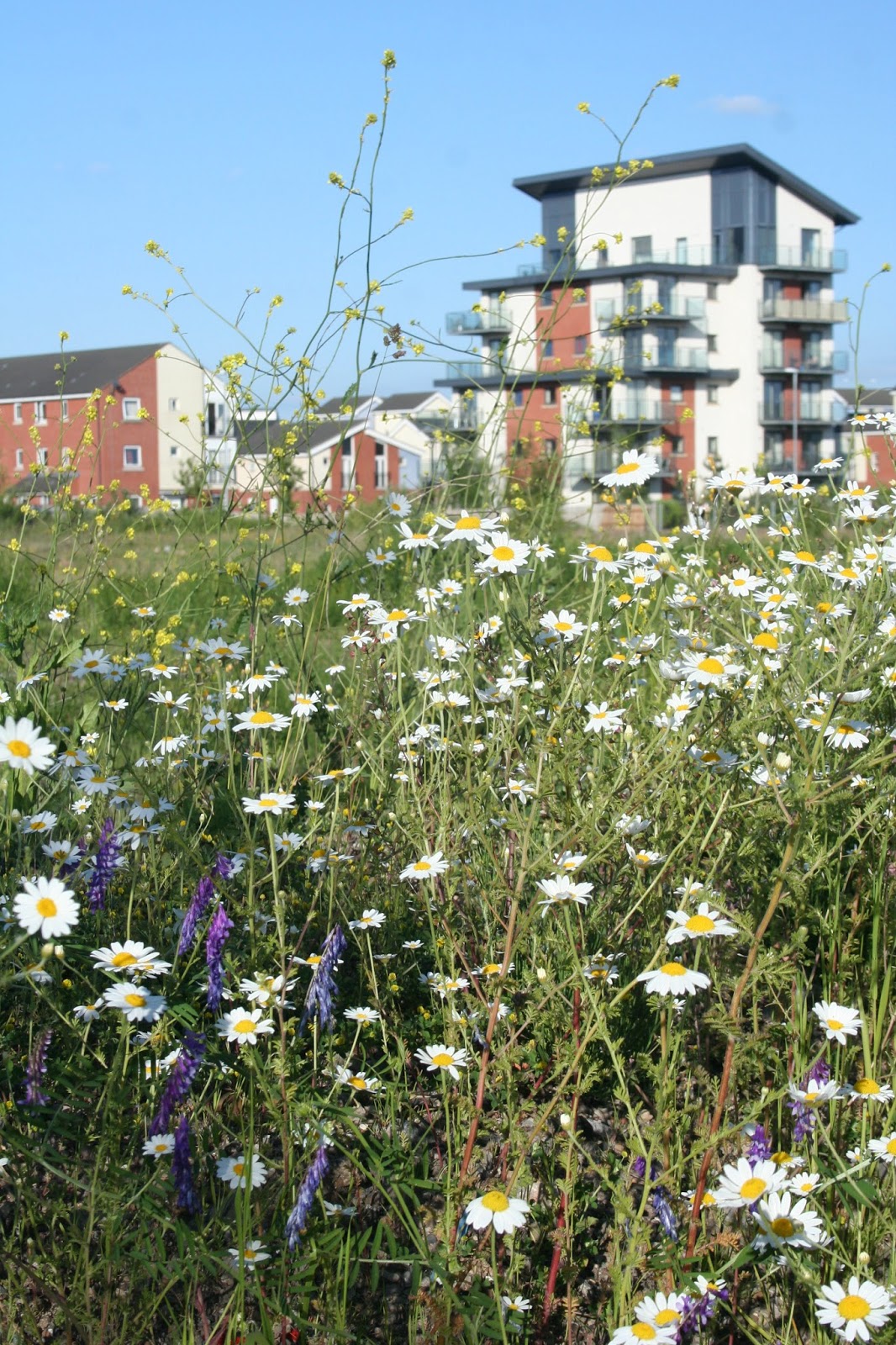
Every time I drive past I make a mental note to drop in sometime soon. Just about the only substantial area of undeveloped land left in Newport's Old Town Dock has looked a tempting prospect and yesterday evening the chance to rummage through its belongings came my way. To the local authority's credit the boundary features of this site are a mass of flowering arable field weeds with poppy and corncockle clearly visible to any observant passing motorist come urban botanist. Newport has embraced this new metropolitan tread of the formal cultivation of wildflower verges.  But this peripheral attraction was not my objective it was the guts of the site I needed to probe. A scramble over a bank and there it was an uncluttered pre-development plateau set against a backdrop of fresh looking housing but with the vegetational stubble of a Glastonbury (Steelhouse www.steelhousefestival.com ) weekender.


A floristic hue of green and yellow dominated by birds foot trefil, black and hop medick, ribbed melilot,  silverweed interspersed with white campion was unspoilt by the absence of willow scrub succession hinting at the sites contemporary origins. Common blue and large white butterflies were frequent along with dozens of hyperactive latticed heath. Where the earth movers had missed their quality assurance target small pools had formed some with reedmace and common blue damselflies others drying into baked bare ground where fast running ground beetles could be exposed from beneath an embedded crisp packet. One such waterbody, linear in form, supported the odd black water beetle and a healthy population of stonewort. Another visit is pencilled into the valley naturalist's itinerary for the end of the month.


Friday, 7 June 2013

Micropterigidae


Micropterix calthella


Micropterix aureatella

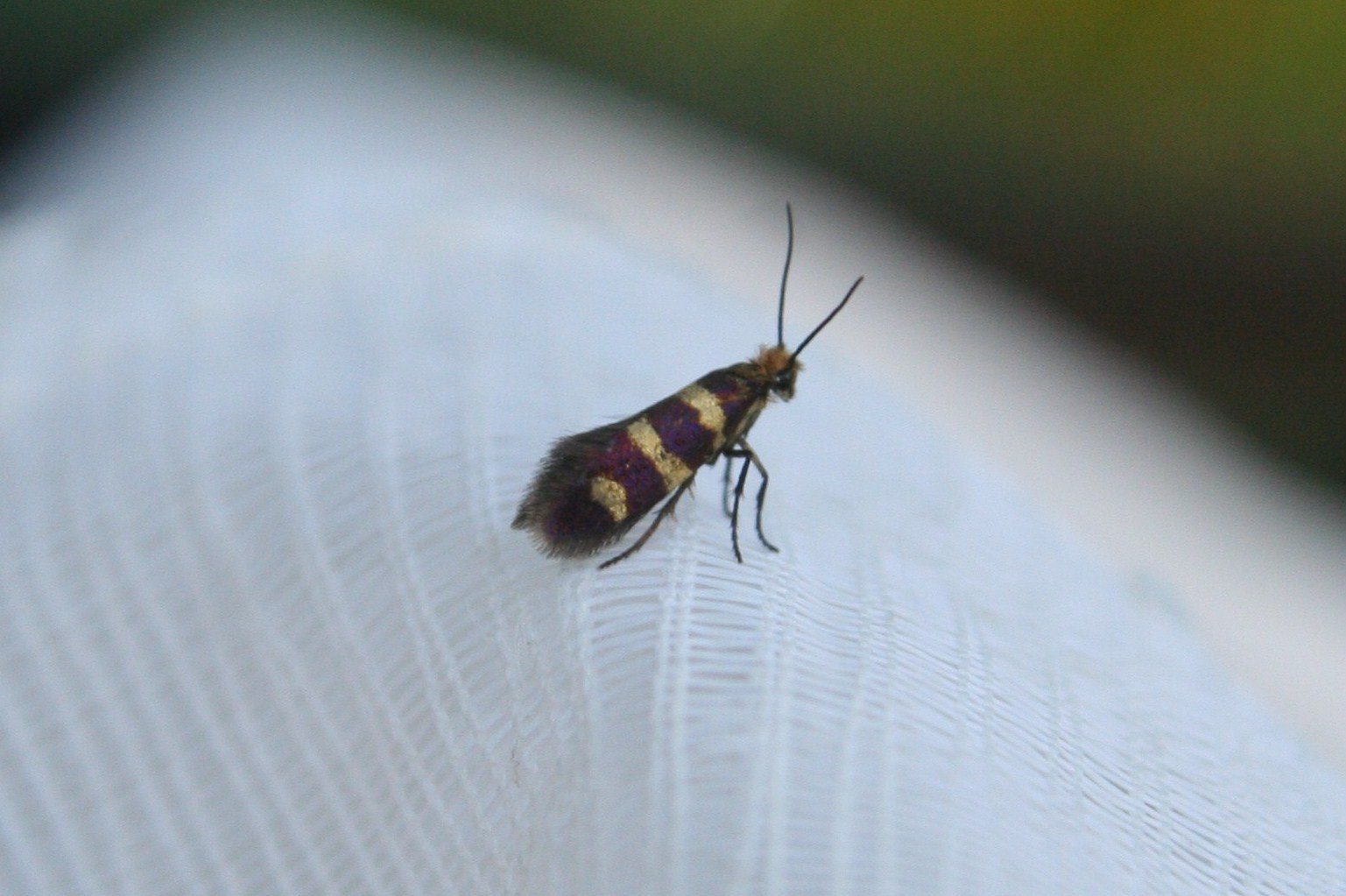
Micro moths can be swines to identify and often I've discovered it's impossible to put a name to some species. However with the publication last years of Micro Moths of Great Britain and Ireland these moths are now little more accessible to a jobbing naturalist. 

The two species photographed above are relatively widespread. The first M.calthella can be easily located in abundance on flowering buttercup and have been recorded at Llantarnam Ponds and Blaeserchan recently. The second  M.aureatella is frequently found on bilberry and was swept from the woodland understory in the Lasgarn Wood yesterday evening.


Thursday, 6 June 2013

The lepidoptera of Blaenserchan

Pyrausta purpuralis

Dingy skipper

Common blue

Dichrorampha petiverella
A evening in the brownfield ruggedness of the Blaenserchan valley where reclamation by nature is far more impressive than anything attempted by hairy arsed engineers. Invertebrates and plants were top of my shopping list and it wasn't long before the infamous naturalist notebook with fresh page headed '4 June 2013 Blaenserchan' was collecting names in true Gilbert White style. Early instar meadow grasshopper was followed by small heath, burnet companion, hairy tare and common blue.  

Into the heart of the valley where birds foot trefoil dominates the sparsely vegetated spoils is where the dingy skipper flies and the green tiger beetle runs. A cuckoo calling in the distance and a singing garden warbler were the ornithological stars of poor show of avian entertainment. Tricky drab coloured micro moths were disturbed from the depths of the grassland habitat as I kicked through it with gay abandon. A Pyrausta purpuralis proved less of an identification challenge along the distinctively marked Dichrorampha petiverella. I feared the worst when trying to track down the recently discovered stags-horn clubmoss took longer than expected to relocate. A passing bare chested dog walker allowed his greyhound to follow me some distance sniffing at my heels before calling for it's to return. I then missed a freshly layed tread filling dog dropping by a whisker!

Sunday, 2 June 2013

It's a washing powder isn't it?


I've some recollection of a past survey of people's understanding of the word 'biodiversity'. Rather predictably  and consistent with the growing epidemic of nature deficit disorder, some of those quizzed about their biological knowledge considered it to be a new brand of washing powder. This apparent link between laundry duties and our natural heritage was presumably the motivation behind the disposal of this eco-mode washing machine yesterday.


A short walk around the soon to be approved Varteg opencast area produced a not unexpected list of breeding birds. The list goes something like this:

Stonechat - pair alarm, carrying food.
Whitethroat - adult carrying faecal sac.
Whinchat - male in song.
Cuckoo - mobbed by several meadow pipit.
Meadow pipit - bird carrying food.
House martin - three birds collecting mud from road side puddle.
Song thrush - bird carrying food.
Linnet - several pairs in suitable breeding habitat.
Willow warbler - frequent alarm call.


Although it was a pre 7am start this didn't stop me bumping into a few dog walkers, all of whom couldn't resist asking me what I was up to. Two middle aged blokes complete with thumb sticks, spaniels and Regatta waistcoats with those 'I'm a countryman' contrasting shoulder patches eagerly demonstrated the extent of their local wildlife knowledge. This centred on telling me where pheasant, duck and deer could be found, but was interspersed with the odd reference to red kite and grouse. Their passionate commentary on local game was put to the knife when I asked about the possible whereabouts of brown hare and grey partridge. After a split second of open mouthed silence (to allow for information assimilation) my two acquaintances mumbled something about 'not seen any for years mate' then bid me farewell.
Related Posts Plugin for WordPress, Blogger...